
Articles
September 18, 2026

You negotiated the plan, you found the point solutions, you funded the programs—you built a genuinely impressive total rewards package.
Then most of it went unused—quietly, with nothing to show for it.
Across a workforce, every employee has a set of high-value benefits actions available to them in a given plan year. It could be their annual physical, a screening that’s due, a condition management program they’re eligible for, a second-opinion benefit before surgery, an HSA they’ve never opened or a dozen other things. Each one is part of the benefits package an employer is paying for.
When we established a baseline across clients using Evive®, the personalized benefits engagement engine from bswift®, roughly one in three of those actions was actually completed. The other two-thirds—left on the table, uncompleted—is your benefits activation gap. It might be the most expensive line item that never appears on your budget.
But this isn’t about employees making bad choices. It’s a structural problem. The benefits year was built around a single annual event, and nobody ever built the layer that comes after it. Until now.
The benefits activation gap is the share of eligible, high-value benefits actions that employees do not complete during a defined period. The completed share is the benefits activation rate.
Most benefits programs are measured by what goes into them—plans offered, enrollments completed, point solutions deployed, and the dollars spent. Almost none are measured by what they do—whether any of it actually got used. That’s the missing link, and it’s how HR can prove the value of the spending that went in.
Two measures that work better than the loosely defined idea of benefits engagement:
Benefits activation is about closing that gap. A question worth taking to your current benefits administration vendor: What is our benefits activation rate?
Most platforms measure enrollment well. Very few can give you a clear view of employee benefits utilization during the 11 months afterward—let alone help employees use their benefits more wisely.
Employer healthcare costs rise for reasons largely outside employers’ control—provider prices, specialty drug spend, high-cost claimants, and on and on. Kaiser Family Foundation estimates the average annual premium for employer-sponsored family health coverage reached $26,993 per employee in 2025, up 6% from the year before. Business Group on Health pegged the increase even higher—a median 9% increase in 2026 before plan-design changes.
Broadly, employers respond two ways, usually both at once:
Both strategies can work, but neither can meet its potential just by being offered.
bswift CEO Ted Bloomberg gets at why in his latest Forbes column, Rising Healthcare Costs Are a Decision Problem, Not a Market Problem: Access alone doesn’t get employees to proactively use their benefits, Ted says, and a price signal doesn’t help employees use their benefits, either. That’s why we’re putting support in place to help employees make better-informed healthcare decisions.
Closing the activation gap requires broad communication that helps employees understand their benefits and personalized guidance that helps each employee identify the next relevant action. Treating either one as sufficient alone would be a mistake.
The first is the traditional benefits communication that builds shared clarity and trust. Employees get a broad understanding of what’s available and where to go. That’s a strategy-and-creative problem—audience research, a coherent narrative, a coordinated calendar, the right channels—and it’s what bswift Engagement Solutions does as an award-winning communications agency, across benefits and the rest of work life.
The second is the individual next step. That’s where Evive personalized engagement comes in. It tracks each employee’s eligibility, what they’ve told us they care about, and their behavior over time, and then turns that into a nudge in the moments that matter, like getting your physical, opening your HSA, or asking about a second opinion before surgery.
That’s the missing layer in our healthcare system that nobody built before now.
And the payoff runs both ways. Employees get told what to do when it actually matters, instead of guessing their way through a benefits guide once a year. Employers get what they’re actually paying for—lower claims, healthier employees, less absenteeism—not a program that gets funded and forgotten.
Evive results show higher completion of selected high-value clinical actions over time, including annual physicals and colorectal cancer screenings. Here’s what benefits activation looks like in the numbers so far.
Excellent benefits administration is necessary, but it needs to be an always-on employee engagement and activation approach alongside it.
Employers will increasingly judge benefits performance by the decisions employees actually make throughout the year, not just by plan design and successful enrollment.
Ask your current benefits administrator for your benefits activation rate. Then talk to us about closing the gap.

Organizations invest enormous resources in their benefits programs because they expect benefits to do more than operate smoothly. Benefits shape employee health, financial security, and represent one of the largest cost centers on the balance sheet.

Explore findings from a multi-client study showing how Evive® helped keep preventive care, cancer screening, and chronic-condition management rates improving over five years.

See how Evive® personalized outreach helped drive measurable follow-through, including a 280% lift in annual physical completion rates and stronger participation across preventive care recommendations.

See how personalized, action-focused recommendations helped employees open, click, and act more often by delivering guidance based on their needs and interests.

Personalized benefits communications drive click rates up to 5x higher than industry benchmarks. Here's what's powering that performance.

In Nashville, there are plenty of great songs that never make the charts. The songs aren’t the problem, it’s just that nobody has a chance to hear them.

Healthcare costs continue to rise sharply. But for all the energy spent on plan design, network negotiations, and premium modeling, one of the biggest cost drivers in employer-sponsored healthcare rarely shows up on a spreadsheet: confusion.

Steve Jobs once called the computer “a bicycle for our minds”—a tool that multiplies what a person can do. AI is a major upgrade to the idea. The bicycle is now a rocket.

Dive into some of the top sessions from Idea Exchange 2025—now available to watch anytime. Whether you're reimagining your benefits strategy, improving the employee experience, or navigating the future of HR, these expert-led presentations offer practical insights and actionable solutions to help you stay ahead.

Personalization in benefits faces a similar challenge. You can explain the idea and the intent, describe the logic, and talk through the data, the AI, the nudges by email and text, and the engagement strategies—but words can only take you so far.

When it comes to benefits, a moment matters when someone isn’t sure what they have, doesn’t know how to use it, second-guesses themselves, or just quietly walks away.

Effective AI for benefits administration isn’t loud. And it isn’t always visible either. It’s structural. That makes it hard to evaluate, especially when vendor demos are polished, your calendar is packed, and there’s little time for deciphering vague answers.

A strategic guide for HR leaders who want clearer judgment, lower risk, and fewer downstream problems

When benefits data moves cleanly, everything gets easier: enrollments go through, deductions match, eligibility stays accurate, and employees get help faster when life changes.

Personalization delivered at scale can support proactive resolution—but its real power lies in shaping smarter decisions, helping people access care earlier, and reducing avoidable healthcare spend.

Learn how holistic health trends in employee wellbeing programs like value-based care, whole person care, mental health.

There’s a reason “penny wise and pound foolish” has survived centuries of business wisdom.

Stress-free annual enrollment starts with bswift. Explore our infographic for HR tech, stellar service, and employee satisfaction at light speed!

Learn how holistic health trends in employee wellbeing programs like value-based care, whole person care, mental health.

Annual enrollment communication doesn’t have to be chaotic. Build trust with employees and simplify decision-making with actionable HR strategies.

Annual enrollment communication doesn’t have to be chaotic. Build trust with employees and simplify decision-making with actionable HR strategies.

It’s open enrollment season — HR’s annual enrollment Super Bowl, where strategy meets sheer endurance.

Annual enrollment communication doesn’t have to be chaotic. Build trust with employees and simplify decision-making with actionable HR strategies.

AI is everywhere in HR right now. Every conference, every panel, every software demo — it’s the headline act. And if you’re in charge of benefits, you’re already feeling the squeeze.

Discover why Millennials and Gen Z ignore employee benefits and how HR leaders can boost engagement with personalization, AI, and smarter communication.
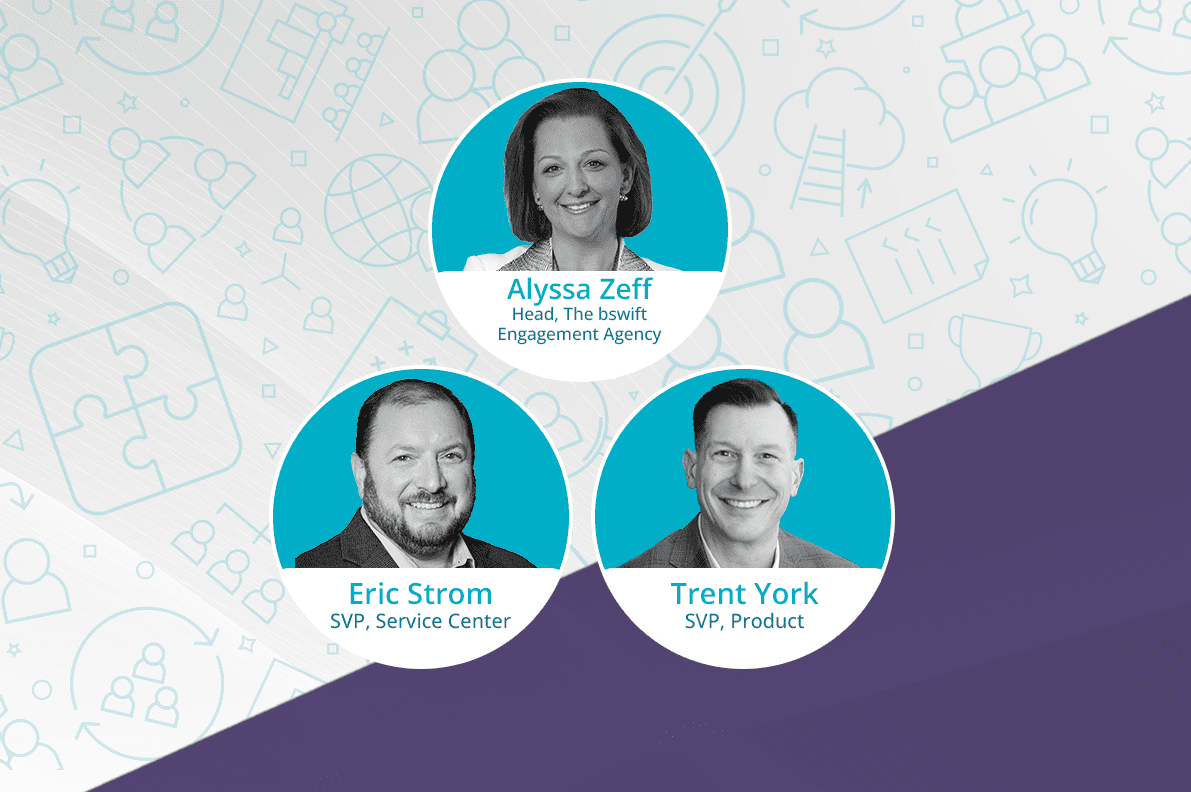
Boost employee and benefits engagement with actionable strategies from this bswift SHRM webinar replay. Watch now and earn SHRM credit!

Prepare for enrollment season with our open enrollment checklist! Discover tips, strategies, and a comprehensive checklist to streamline your planning and execution.

Download this HR Buyer’s Guide to benefits administration solutions. Learn how to compare vendors, evaluate features, and build a business case with real ROI.

Prepare for enrollment season with our open enrollment checklist! Discover tips, strategies, and a comprehensive checklist to streamline your planning and execution.

Annual enrollment communication doesn’t have to be chaotic. Build trust with employees and simplify decision-making with actionable HR strategies.

Hear how bswift's Service Center blends HR tech and empathy to transform employee benefits support—driving a 95% satisfaction rate.

Discover four strategies HR leaders can use rebuild clarity, foster connections, create meaningful growth opportunities and boost employee engagement.
Dive into some of the top sessions from Idea Exchange 2025—now available to watch anytime. Whether you're reimagining your benefits strategy, improving the employee experience, or navigating the future of HR, these expert-led presentations offer practical insights and actionable solutions to help you stay ahead.

Whether it’s clunky manual tasks, confused employees, low engagement, or compliance risks, your current system is frustrating and feels like it’s holding you back.

Boost employee and benefits engagement with actionable strategies from this bswift SHRM webinar replay. Watch now and earn SHRM credit!

Discover the HR trends shaping 2025, from skyrocketing healthcare costs to smarter benefits strategies. Learn how to stay ahead and support your team.

Stress-free annual enrollment starts with bswift. Explore our infographic for HR tech, stellar service, and employee satisfaction at light speed!

Support employee health and reduce costs with effective diabetes management programs that promote workplace wellness and enhance productivity.

Here's how strong company culture, driven by core values, improves employee engagement and business success. Learn how to strengthen culture.
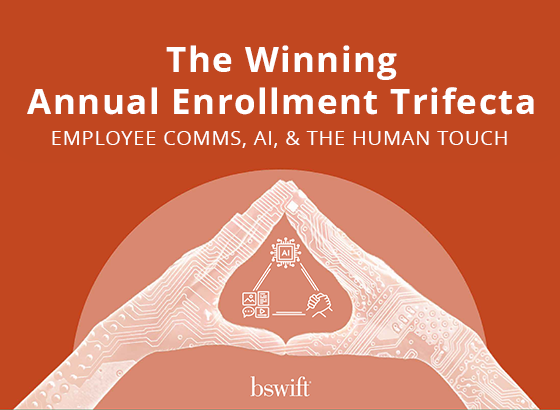
Our annual enrollment infographic unlocks the power of effective communication, AI, and human expertise for a seamless benefits experience.


Master annual enrollment with our checklist. From HR tech to communication planning, streamline your HR process and improve your employee benefits rollout.

Learn how holistic health trends in employee wellbeing programs like value-based care, whole person care, mental health.

Cut through the hype. From Mindful AI to people analytics, these 4 trends in AI for HR boost employee engagement and attract top talent.

Unlock AI’s potential in HR with bswift: Automate tasks, enhance decision-making, and focus on strategic goals. Discover AI’s role in recruitment, onboarding, and more
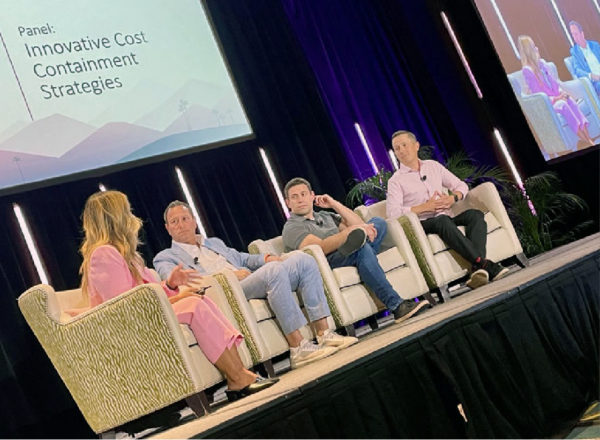
Rising healthcare costs got your HR team down? Discover 4 data-driven cost-containment strategies from bswift's IX to reduce healthcare spending & improve wellbeing.

bswift Engagement Solutions wins 2 Gold Hermes Awards for creative employee benefits communication. Learn more about our award-winning work!
Empower your employees with bswift's Emma, an AI-powered benefits assistant. Personalized recommendations, plan comparisons and more.

Simplify benefits administration and empower HR with tools to streamline enrollment, optimize benefits use, and free HR for strategic work.

Effective employee communication is crucial for HR. Learn best practices to improve benefits utilization and employee engagement.

Benefits enrollment best practices for HR. Improve employee communications strategies, analyze benefits utilization and enhance benefits portfolios.

February is American Heart Month – the perfect time to focus on workplace wellness and heart health through personalized digital tools and connected capabilities.

Let's look at the future of HR, from AI and automation to cost containment, tailored well-being initiatives, and adapting to remote work.

Boost employee benefits engagement with proven HR strategies like clear communication, feedback loops, and AI chatbots to empower employees

bswift Elevate is reimagining the employee well-being journey and simplifying the employee experience with hyper-personalized messaging to drive deeper engagement in employer wellbeing programs.

A smart way to boost employee engagement is to create a total compensation statement that details the value of their salary, benefits and other rewards.
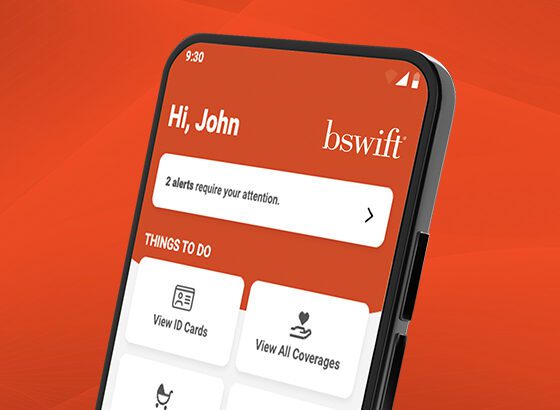
The bswift Mobile App offers your employees seamless access to their benefits. Download the app now via the App Store or Google Play Store.

Make annual enrollment frictionless and empowering, These tips will help you optimize the employee experience and drive talent retention.

Explore the core connection between employee benefits, employee wellbeing, and business success. Get a roadmap for reviewing your organization's current offerings to ensure they're relevant, accessible and effectively supporting workforce health and productivity.
bswift's Idea Exchange 2023 Conference brings you insights on employee benefits engagement and benefits administration. Access session videos and more. Perfect for any HR professional looking to stay up-to-date.

Meet Emma, the AI HR assistant who resolves benefits questions, provides enrollment guidance, and improves the employee experience.

Great employee benefits communication is crucial for employee satisfaction. Get tips for effective benefits communications that engage all stakeholders, using a multi-channel approach, incorporating empathy, focusing on timing, highlighting total rewards, and broadening the conversation on employee wellbeing.
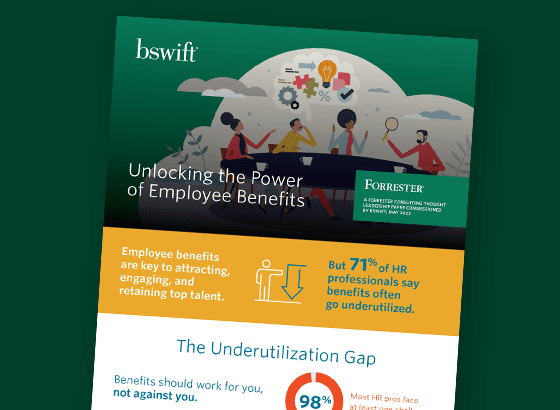
Employee benefits are key to attracting, engaging and retaining top talent. Read this infographic to learn more on the underutilization gap

Improve retention, engagement, wellbeing and productivity with an effective employee benefits utilization strategy. Boost benefits engagement with these tips.

Improve engagement and retention with effective employee benefits utilization. Learn common challenges, solutions, and the importance of prioritizing employee wellbeing.

Discover how HR pros can improve employee benefits engagement with insights from Forrester Research. Boost morale, productivity and retention, and cut healthcare costs. See the survey results and actionable strategies now.

Learn which employee benefits matter most to employees, and how these top employee benefits boost satisfaction, retention, and recruitment. A must-read for HR professionals.

bswift experts answer CHROs' questions about using AI to improve HR. Learn how to avoid pitfalls, partner with CTOs, and create a better employee experience.

Let's look at the benefits and the risks of AI in HR. From data privacy to legal liability, CHROs and CTOs can partner to safely implement AI for business.

Unlock the full potential of your employee benefits communication. Benefits U helps you save time and effort and boost employee engagement.

Learn how to reduce healthcare costs and improve employee satisfaction with a culture of health in the workplace. Follow these 6 easy steps.

How you can make the most of this celebration by incorporating employee benefits into your diversity, equity, and inclusion strategy.

With the dust settling on annual enrollment, it's time to look back and learn. Here are a few simple questions you and your HR team can ask.

In 2023, technology will continue to play a major role in how we adapt. Here are the top five HR trends we’re watching in 2023.
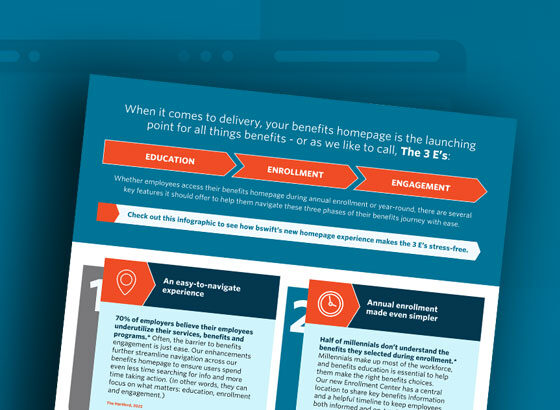
Your benefits homepage is the launching point for all things benefits, check out this infographic to see how bswift's new home page experience makes the 3 E's stress free.

Struggling to navigate the Great Resignation? Here are a few ways to improve and develop a more employee-centric-culture.